Are Branded Residences in Dubai a Good Investment? What 2026 Resale Data Shows
Branded residences in Dubai can be a sound investment, but only when the brand adds something a resident will still pay for years after launch. Resale data from 2026 shows owners in several branded towers selling at losses of 23% to 47%, including buyers who held through Dubai’s strongest years.
What the 2026 Resale Data Shows
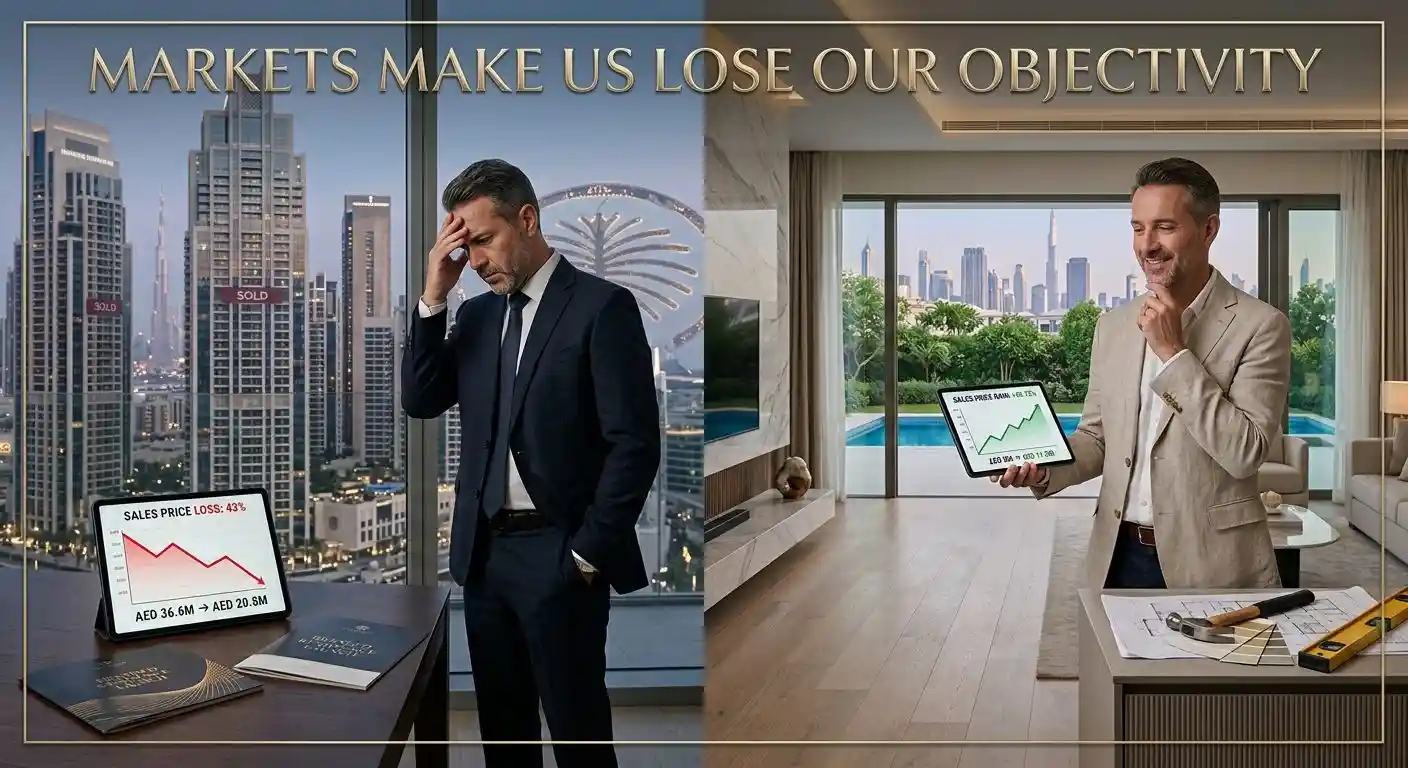
In a branded tower in Business Bay, a 3-bedroom apartment bought from the developer in September 2023 for AED 36.6 million resold in August 2026 for AED 20.8 million. That is a 43% loss after nearly three years of rising prices across the city.
In the same tower, two 2-bedroom apartments bought in December 2025 for around AED 28.6 to 28.8 million resold within seven months for AED 15.3 to 15.8 million, losses of 45% to 47%. Launch prices ran above AED 7,000 per sq ft. Every resale I have reviewed in that building landed between roughly AED 3,800 and 5,000 per sq ft.
On Palm Jumeirah, a 4-bedroom in a hotel-branded tower bought in July 2023 for AED 53.5 million sold in June 2026 for AED 41 million, down 23%.
Different buyers, different entry dates, different brands. The common factor is the entry price.
Why Branded Residences in Dubai Trade at a Premium
According to a Betterhomes report, buyers in Dubai pay an average premium of around 40% for branded homes over comparable non-branded properties nearby. One H1 2026 market report put the gap closer to 56%.
That premium pays for more than the brand. A launch price typically includes the land, construction, marketing and commissions, the licence fee paid to the brand, financing and holding costs, buyer incentives such as payment plans and DLD waivers, and the developer’s profit. None of that is unusual, and a developer is entitled to a profit. But none of it adds usable space to your home.
In my experience, buyers lose objectivity at both ends of a cycle. In a rising market, they assume prices will rise forever and stop asking what an asset is worth today. In a falling market, they assume the opposite. The brand premium is easiest to sell at the top.
Brand Premium vs Real Value: The End-User Test
The test I apply is simple. Does the brand improve the experience of the person who will actually live there, enough that a tenant or the next buyer will pay for it?
A hotel operator that runs the building, the services and the management can pass that test. A name on the facade, branded finishes and a showroom usually cannot. Fashion and automotive-branded towers in Dubai do not yet have a long resale track record to prove otherwise.
The Palm example matters here. Even a hotel brand could not protect an owner who entered at an inflated price. Brand quality helps, but entry price decides the outcome.
Then comes the question of who actually uses these homes. A buyer paying AED 20 to 30 million for a 2 or 3-bedroom apartment rarely owns only one property. Holding costs add up quickly: service charges in some towers at this level approach AED 50 per sq ft a year, around AED 200,000 a year on a 4,000 sq ft apartment.
Why One Sale Affects Every Owner in the Building
Dubai Land Department transaction data is public. Once a few units resell at 40% below launch, those prices become the comparables for the whole building.
Valuers use them. Banks lend against them. The next buyer negotiates with them. An owner who planned to hold for ten years still feels the impact on valuation, refinancing and future resale, even without selling.
I have seen this pattern repeat across buildings: a handful of forced sales quickly becomes the market’s story about a tower.
How Value-Creating Investments Compare
Many investors buy branded off-plan for two reasons: they do not know another way to invest in Dubai property, and they like paying in stages. Development also works in stages, with the land first and construction paid as it progresses.
The difference is who creates the value. In off-plan, the developer creates it and charges a premium for it. In renovation and development, the value is created with the investor’s own capital. On a District One villa we bought for AED 7.5 million, around AED 1 million of renovation and furnishing formed part of a sale at AED 12.5 million. The market helped, but the work created the margin.
That margin acts as a cushion. The market has to fall much further before a well-bought, well-executed project loses money. It is not risk-free. Renovations run over budget, buyers overpay at purchase, and sales slow in softer markets. Having worked on Dubai construction sites since 2013, I treat the purchase price and the execution plan as the two things that decide every result.
Frequently Asked Questions
1. Are branded residences in Dubai a good investment in 2026?
They can be, if the brand adds a real service or living advantage and the entry price is close to comparable non-branded values. 2026 resale data shows owners in several branded towers selling at losses of 23% to 47%. Check resale prices in the building and the area before paying a launch premium.
2. How much more do branded residences cost in Dubai?
Reports put the average premium at around 40% over comparable non-branded homes, with one H1 2026 report estimating closer to 56%. The premium varies by brand type, location and developer.
3. Do branded residences hold their value on resale?
Hotel-operated branded residences with a long track record tend to hold value better. Newer fashion and automotive-branded towers have little resale history in Dubai, and some 2026 resales came in 40% or more below launch prices.
4. Why are some Dubai off-plan units reselling below the original price?
Common reasons include an inflated launch price, sellers who need liquidity before or at handover, and a narrow pool of end users at very high price points. Softer market conditions in 2026 have also increased the number of motivated sellers.
5. How do resale losses in a building affect other owners?
Valuers and banks use recent transactions in the same building as comparables. Low resales reduce valuations and mortgage amounts for every owner, even those who are not selling.
6. What should I check before buying a branded residence in Dubai?
Compare the price per sq ft with completed non-branded buildings nearby, look at registered resales in the developer’s existing branded towers, and ask who operates the building after handover. Also calculate annual service charges, because they can exceed AED 200,000 a year on larger units.
7. Is renovation a safer way to invest in Dubai real estate?
Renovation is not risk-free, but the return depends more on purchase price and execution than on the market rising. Buying below comparable values and adding real value creates a margin that gives the investor a cushion if prices soften.
Speak to Saliq Zahoor
If you own a branded unit and want an honest view of its value in 2026, or you want to see how renovation and development investing works with real numbers, start with a conversation. To discuss your branded residence valuation or a renovation investment, contact Saliq Zahoor directly.
WhatsApp +971 567 123 666 or email [email protected].
Visit www.eplogproperties.com for current listings and market data.
For weekly Dubai real estate analysis grounded in real transactions, follow @saliqzahoordxb on Instagram, TikTok, YouTube and LinkedIn.