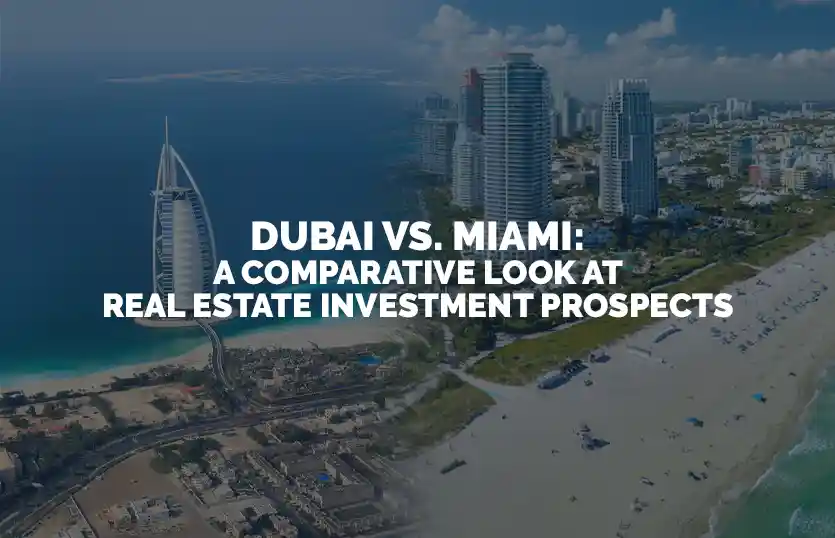
Dubai vs Miami A Comparative Look at Real Estate Investment Prospects
Dubai vs. Miami: Which Real Estate Market Delivers Better ROI
Dubai offers 6–9% rental yields with zero property taxes, making it ideal for cash-flow investors seeking luxury assets at lower entry prices ($550–800/sqft). Miami provides 3–5% yields with higher costs ($1,000–1,400+/sqft + 1.25% property tax) but greater long-term stability. Choose Dubai for tax-efficient income or Miami for capital preservation.
Market Overview Core Investment Drivers
Dubai’s Growth Engine
- Tax-Free Environment: No property, income, or capital gains taxes
- High Rental Demand: 90% expat population drives 6–9% yields
- 100% Foreign Ownership: Freehold areas like Palm Jumeirah and Downtown Dubai
- Economic Diversification: Focus on tech, finance, and tourism (e.g., Dubai Urban Tech District)
Miami’s Stability Factors
- Safe Haven Status: Top U.S. destination for Latin American capital
- Limited Supply: Water-constrained geography protects values
- Currency Strength: USD as global reserve currency
- Population Growth: 15% migration increase from other states since 2020
Investment Metrics: Direct Comparison
Factor | Dubai | Miami |
Price/Sqft (Luxury) | $550–800 | $1,000–1,400+ |
Rental Yield | 6–9% | 3–5% |
Property Tax | 0% | ~1.25% |
Transaction Fee | 4% (DLD) | 5–7% (closing costs) |
Regulatory Landscape: Landlord Perspectives
Dubai’s Investor-Friendly System
- Fast Purchases: Deals close in 7–14 days
- Freehold Rights: Full ownership in 25+ designated zones
- Streamlined Evictions: 30-day process for non-paying tenants
- 2025 Update: Blockchain title deeds reduce fraud risk
Miami’s Balanced Approach
- Longer Closings: 30–45 days with title insurance
- Tenant Protections: Evictions can take 3–6 months
- Rent Control Risks: Possible caps on income growth
- Rising Insurance: Hurricane coverage up 20% in 2024
Risk Analysis Key Challenges
Dubai’s Considerations
- Market Volatility: Prices can swing ±15% with oil/global trends
- Oversupply Risks: Short-term vacancies in new developments
- Geopolitical Sensitivity: Regional tensions may affect sentiment
Miami’s Concerns
- Climate Vulnerabilities: Sea-level rise impacts coastal properties
- Interest Rate Sensitivity: Fed hikes reduce buyer demand
- Economic Dependence: Tied to Latin American capital flows
Future Growth Outlook 2025–2030
Dubai’s Trajectory
- Vision 2040: $100B+ infrastructure investment
- Tech Migration: 500+ tech firms relocated in 2024
- Tourism Growth: 25M visitors projected for 2025
- Price Appreciation: 8–12% annual growth forecast
Miami’s Expansion
- Tech Influx: "Miami Movement" brings hedge funds/crypto firms
- Urban Projects: $10B Miami Worldcenter development
- International Demand: #1 U.S. market for foreign buyers
- Price Appreciation: 4–6% annual growth forecast
Which Market Fits Your Goals?
Choose Dubai If You Want:
- 6–9% rental yields (tax-free)
- Luxury assets at 40–50% Miami prices
- Fast transactions (1–2 weeks)
- Medium-term growth (5–7 year horizon)
Choose Miami If You Prefer:
- USD-denominated stability
- U.S. legal protections
- Long-term capital preservation
- Lower volatility (but higher costs)
Frequently Asked Questions
1. Which city has higher rental yields in 2025?
Dubai (6–9%) outperforms Miami (3–5%) by 2–3x.
2. Are there property taxes in Dubai?
No. Dubai has 0% property tax vs. Miami’s 1.25% annual tax.
3. How do luxury prices compare?
Dubai luxury averages $550–800/sqft vs. Miami’s $1,000–1,400+/sqft.
4. Which market is more volatile?
Dubai sees higher short-term swings, while Miami faces climate/interest rate risks.
5. Can foreigners own property freely?
Yes, but Dubai offers 100% freehold in designated zones, while Miami has no restrictions.