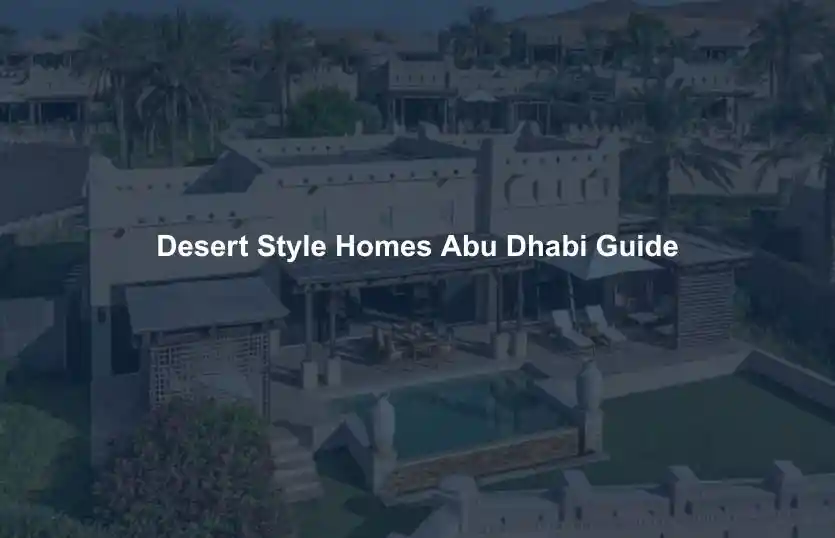
Desert Style Homes Abu Dhabi Guide
Desert style homes in Abu Dhabi are defined by functional architectural elements: thick walls for thermal mass, central courtyards for cooling, and shaded outdoor spaces that work with the climate rather than against it. Key communities include Al Raha Golf Gardens, Al Reef Villas, and Golf Gardens, with custom options in Khalifa City and Al Bateen. These homes offer superior energy efficiency and authentic character but require higher maintenance and appeal to a specific buyer market.
What Defines Desert Style Architecture?
Desert style homes are not a marketing term. They are a response to climate, culture, and landscape. Understanding the architectural elements helps you appreciate what you are buying.
Thick Walls and Thermal Mass
The most fundamental feature of desert architecture is thermal mass. Walls built from stone, brick, or insulated concrete absorb heat during the day and release it slowly at night. This natural temperature regulation reduces reliance on air conditioning.
In traditional desert homes, walls could be a meter thick. Modern desert style homes use advanced materials to achieve the same effect with less visual bulk. The principle remains: the building works with the climate, not against it.
Courtyards as Living Spaces
The courtyard is the heart of desert style living. It is not an afterthought or a decorative element. It is a functional space designed to capture breezes, provide shade, and create a private outdoor room.
Courtyards in desert homes are oriented to maximize airflow. Walls shade the space during the hottest hours. Water features or plants add evaporative cooling. The courtyard becomes an extension of the interior, usable for much of the year.
Shaded Outdoor Areas
Desert style homes extend living outdoors through shaded verandas, covered terraces, and screened porches. These spaces are designed for use during early mornings and late evenings when temperatures are tolerable.
The shading is architectural—deep overhangs, pergolas, and carved screens that filter light rather than blocking it completely. The goal is to create usable outdoor space without direct sun exposure.
Earth Tones and Natural Materials
The palette of desert architecture comes from the landscape. Earth tones—sandy beiges, warm terracottas, soft browns—blend the building into its surroundings. Materials are natural: stone, wood, plaster, and clay.
The effect is a home that feels like it belongs where it sits. It does not shout for attention. It settles into the landscape.
Mashrabiya and Decorative Screens
Traditional desert architecture used carved wooden screens called mashrabiya to provide shade while maintaining airflow and privacy. Modern desert style homes use contemporary interpretations—perforated metal screens, laser-cut panels, and decorative block work.
These screens serve multiple functions: they filter harsh sunlight, create privacy from neighbors, and add visual interest to facades.
Quick Fact: Traditional desert walls could be up to one meter thick, using thermal mass to keep interiors cool without air conditioning.
Key Communities for Desert Style Homes in Abu Dhabi
Al Raha Golf Gardens
- Located in Khalifa City, Al Raha Golf Gardens offers villas with desert-inspired architecture set around a golf course. The development uses earth tones, courtyard layouts, and shaded outdoor spaces that align with desert style principles.
- Homes here range from three to six bedrooms, with private gardens and community amenities including pools and parks. The location provides access to Abu Dhabi's main employment zones while maintaining a suburban feel.
Al Reef Villas
- Al Reef is one of Abu Dhabi's largest villa communities, with architecture inspired by traditional Arabian design. The villas feature courtyard layouts, thick walls, and shaded outdoor spaces that capture the desert aesthetic.
- The community offers a range of villa sizes at accessible price points. While not ultra-luxury, the architectural approach respects desert style principles. The development is well-established with schools, supermarkets, and community facilities.
Golf Gardens
- Golf Gardens in Khalifa City offers villas with desert-inspired architecture in a mature, landscaped setting. The homes feature courtyard designs, shaded terraces, and finishes that reflect the regional aesthetic.
- The community is established with mature landscaping that enhances the desert feel. The golf course setting adds green space while the architecture remains true to its regional roots.
Private Villas in Khalifa City and Al Bateen
- For buyers seeking custom desert style homes, the villa areas of Khalifa City and Al Bateen offer opportunities to build or purchase unique properties. Many private villas in these areas were designed by architects who understand desert style principles.
- These properties are individual rather than part of master-planned communities. Each reflects the owner's interpretation of desert living. They range from traditional Arabian designs to contemporary interpretations of desert architecture.
Modern Desert Style vs Traditional Desert Architecture
Traditional Desert Homes
- Traditional desert architecture in the UAE was pragmatic. Homes were built from materials available locally: coral stone, gypsum plaster, palm fronds. The layout prioritized privacy, with high walls and internal courtyards hiding the home from the street.
- Rooms were arranged around the courtyard, with ventilation designed to capture prevailing winds. The majlis (guest reception area) was separate from family living spaces. Every element served a function.
Contemporary Desert Style
- Modern desert style homes reinterpret these principles for contemporary living. The courtyard remains central, but now it might include a swimming pool rather than just a fountain. The thick walls are now insulated concrete rather than coral stone. The mashrabiya is aluminum rather than carved wood.
- The aesthetic is cleaner, the layouts more open, but the underlying principles remain. The home works with the climate. It provides privacy. It extends living outdoors. It belongs to its landscape.
What to Look for When Buying a Desert Style Home
Orientation and Shading
- The best desert style homes are oriented to minimize solar gain. Living areas face north or east. Western exposures have minimal glazing or are heavily shaded. The courtyard captures prevailing breezes.
- When viewing a property, note where the sun hits at different times of day. A home that feels comfortable in the afternoon has been designed with orientation in mind.
Courtyard Design
- The courtyard should be usable, not just decorative. Is there shade during the middle of the day? Does it capture breezes? Is it private from neighbors? A courtyard that is unusable for most of the year defeats the purpose of desert style design.
Material Quality
- Desert style homes depend on material quality to perform. Thick walls require proper construction to achieve thermal mass. Natural materials need maintenance. Inspect finishes carefully—good desert architecture shows attention to detail.
Outdoor-Indoor Flow
- The transition between indoors and outdoors should feel seamless. Sliding doors or folding glass walls that open to the courtyard. Shaded terraces that connect to living areas. The distinction between inside and outside should blur.
Privacy
- Privacy is central to desert architecture. The home should feel secure from the street. Views from neighbors should be blocked. Outdoor spaces should feel private without feeling closed in.
The Lifestyle Living in a Desert Style Home
Seasonal Living
- Desert style homes work with the seasons, not against them. In winter, the courtyard becomes a primary living space. In summer, the thick walls keep interiors cool. You learn to live differently—outside in the mornings and evenings, inside during the hottest hours.
- This seasonal rhythm becomes part of daily life. It connects you to the climate rather than insulating you from it.
Entertaining
- Desert style homes are designed for entertaining. The courtyard becomes a gathering space for evening gatherings. The majlis or formal living area accommodates guests separate from family spaces. The layout supports both intimate family life and larger social events.
Maintenance
- Natural materials require care. Wooden screens need treatment. Plaster finishes need repainting. Courtyard plants need watering. A desert style home is not a low-maintenance property. It requires attention to preserve its character.
Desert Style vs Standard Villa Key Differences
Thermal Performance
Desert style homes typically outperform standard villas in energy efficiency. The thermal mass reduces cooling loads. Courtyards create microclimates that lower surrounding temperatures. Standard villas depend entirely on air conditioning.
Aesthetic Character
Desert style homes have character that standard villas lack. They are not interchangeable. Each courtyard, each screened window, each shaded terrace is designed for its specific location. Standard villa developments often look identical from the outside.
Resale Market
Desert style homes appeal to a specific buyer. Some buyers seek the character and authenticity of desert architecture. Others prefer contemporary designs. The resale market depends on finding buyers who appreciate the style.
Construction Quality
Well-built desert style homes are often superior in construction quality to standard villas. The emphasis on materials, orientation, and detailing requires skilled architects and builders. Standard villa developments are optimized for speed and cost.
Tips for Desert Style Home Buyers
- Visit at Different Times: See the property in the morning, afternoon, and evening. How does the courtyard feel at noon? Does the terrace catch the evening breeze? A home that works at all times has been well-designed.
- Check Orientation: Bring a compass or use your phone to check orientation. Living areas facing north are preferable. Western exposures should be heavily shaded. A home with poor orientation will struggle regardless of its design.
- Inspect Materials: Look closely at finishes. Are the walls solid? Are the screens well-made? Is the plaster smooth and even? Quality materials and workmanship are essential for desert style homes to perform.
- Talk to Current Residents: If possible, talk to residents of the community or similar homes. Ask about energy bills. Ask about maintenance. Ask what they would change. Their experience tells you more than any sales presentation.
- Consider Future Development: Desert style homes depend on their surroundings. A courtyard is only private if surrounding buildings respect that privacy. Check what is planned for neighboring plots. Future development could change the character of your home.
- For navigating desert style home opportunities with verified data, the specialists at Eplog Offplan Properties provide community-specific analysis and access to inventory.
The Cost of Desert Style Living
Purchase Price
Desert style homes vary widely in price. Custom architect-designed villas command premiums. Standard villas in communities like Al Reef offer desert style at accessible prices. The premium is for location, land size, and architectural quality.
Energy Costs
Well-designed desert style homes typically have lower energy costs than standard villas. The thermal mass reduces cooling loads. Courtyards and shading reduce solar gain. These savings add up over years of ownership.
Maintenance
Maintenance costs are higher for desert style homes with natural materials. Wood needs treatment. Plaster needs repainting. Courtyard landscaping needs care. Factor these costs into your budget.
Insurance
Desert style homes with custom features may have higher insurance costs than standard villas. Replacement costs for unique materials are higher. Check with insurers before committing.
Frequently Asked Questions
1. What are the key features of desert-style homes in Abu Dhabi?
Key features include thick walls for thermal mass, central courtyards for cooling, shaded outdoor areas, earth tone color palettes, natural materials like stone and wood, and decorative screens (mashrabiya) for shade and privacy. These elements work together to create homes that perform well in the region's climate.
2. Which communities in Abu Dhabi have desert style villas?
Key communities include Al Raha Golf Gardens (Khalifa City), Al Reef Villas (affordable desert style), Golf Gardens (mature landscaping), and private villa areas in Khalifa City and Al Bateen for custom architect-designed homes.
3. Are desert-style homes more energy efficient than standard villas?
Yes. Well-designed desert-style homes typically have lower energy costs due to thermal mass reducing cooling loads and courtyards creating microclimates. Standard villas depend entirely on air conditioning.
4. What should I look for when buying a desert-style home?
Prioritize:
- Orientation: Living areas facing north or east
- Courtyard usability: Shade and breeze capture
- Material quality: Proper construction for thermal mass
- Outdoor-indoor flow: Seamless transitions
- Privacy: Secure from the street and neighbors
5. What are the maintenance requirements for desert-style homes?
Desert-style homes require higher maintenance than standard villas. Natural materials need care: wooden screens need treatment, plaster finishes need repainting, courtyard landscaping needs regular attention. Factor these costs into your budget.